
Clean water is a cornerstone of good health and longevity. Yet, even in developed countries, tap water can contain
trace contaminants;from chlorine and heavy metals to pesticides and pharmaceutical residues.
For those aiming to optimize their health or gain a measure of control over what they ingest daily, using a water filter
is a simple yet impactful solution. Below, we explore various at-home water filtration methods, weighing their
benefits, drawbacks, and ideal use cases.
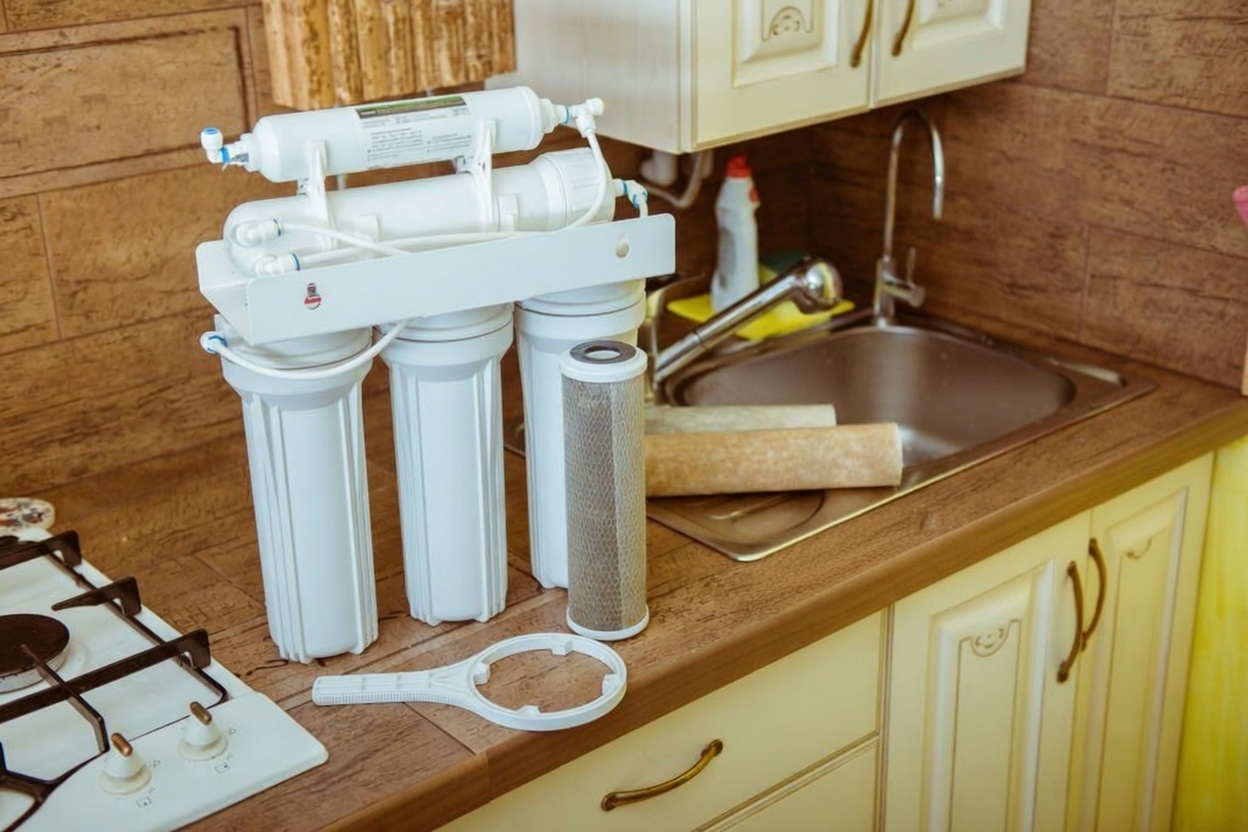
1. Activated Carbon Water Filter
How it works: Activated carbon attracts and absorbs contaminants like chlorine, volatile organic compounds (VOCs),
and some pesticides. It works through a process called adsorption, not to be confused with absorption.
Pros:
- Removes unpleasant taste and odour
- Affordable and widely available
- Easy to install (often as pitchers or faucet attachments)
Cons:
- Doesn’t remove heavy metals or microbes
- Filter cartridges require regular replacement
- Best for: Improving taste and removing basic chemical impurities.
2. Reverse Osmosis (RO) Water Filter
How it works: RO pushes water through a semipermeable membrane that blocks most dissolved solids, including lead,
arsenic, fluoride, nitrates, and even some bacteria and viruses.
Pros:
- Highly effective at removing a wide range of contaminants
- Good for people with compromised immune systems
Cons:
- Wastes 3-4 gallons of water for every gallon filtered
- Removes beneficial minerals like calcium and magnesium
- Requires professional installation and maintenance
- Best for: Comprehensive filtration in areas with known water quality issues.
3. Distillation Units
How it works: Water is boiled to produce steam, which is then condensed back into liquid form, leaving most
contaminants behind.
Pros:
- Extremely effective at removing bacteria, viruses, and heavy metals
- Doesn’t require filter replacements
Cons:
- Energy-intensive and slow process
- Strips water of all minerals
- Often has a flat taste
- Best for: Emergency use or when purity is prioritized over speed and taste.
4. UV Purification Water Filter
How it works: Ultraviolet light disrupts the DNA of microorganisms, rendering bacteria, viruses, and parasites
inactive.
Pros:
- Chemical-free microbial purification
- Fast and effective
Cons:
- Doesn’t remove chemical contaminants or particulates
- Requires electricity
- Works best in conjunction with a pre-filtration system
- Best for: Homes with biologically unsafe water but low chemical contamination.
5. Ceramic Water Filters
How it works: Water passes through tiny pores in a ceramic filter that block bacteria, protozoa, and sediment.
Pros:
- Long-lasting and reusable after cleaning
- No electricity required
Cons:
- Limited effectiveness against viruses and chemicals
- Slower filtration rate
- Best for: Off-grid living or regions with questionable biological safety but few industrial pollutants.
6. Gravity-Fed Multi-Stage Systems
How it works: Combines several filtration technologies (e.g., activated carbon, ceramic, ion exchange) in a
gravity-fed setup, often used in countertop systems like the Berkey.
Pros:
- Versatile and comprehensive filtration
- No plumbing or electricity needed
Cons:
- Bulky countertop footprint
- Initial cost can be high
- Best for: People seeking robust filtration without altering plumbing.
Final Thoughts
The best at-home water filtration method depends on your local water quality, lifestyle, and goals.
For general taste improvement, activated carbon filters are an easy start. If you want to remove everything from
microbes to heavy metals, reverse osmosis or multi-stage systems may be better.
Whatever your choice, understanding the strengths and limitations of each method empowers you to make an
informed decision that supports your health, the environment, and your peace of mind.